Wildwood Springs · DeLeon Springs, Florida
A Naturalist’s Portrait of Wildwood Springs
Observations and stewardship notes from a four-acre Florida homestead
A place is never fully known. It reveals itself through return: the same path in another season, the same tree after rain, the creature that was present long before I learned how to notice it.
01
About This Portrait
This is not a formal ecological survey. It is a place-based natural history record developed through repeated observation of a four-acre homestead in DeLeon Springs, Florida. I write as an amateur naturalist living within the landscape: returning to the same trees, clearings and creatures, recording what I see, and allowing my understanding to change as the evidence changes.
The first version of this work was written for my naturalist certification in December 2025. It attempted to gather the property into a conventional site assessment and management plan. This revised portrait keeps the observations at its heart while becoming more honest about what they can and cannot establish. A record may be direct, indirect or provisional. An ecological relationship may be plausible without being demonstrated on this particular property. I have tried to preserve that distinction.
My purpose is not to produce a final account of Wildwood Springs. It is to establish a careful baseline from which a deeper and more useful understanding can grow.
- Observed
- Seen, heard, photographed or otherwise encountered on the property.
- Indirect
- Known from tracks, scat, burrows, calls or other field signs.
- Provisional
- An identification or interpretation that remains open to correction.
02
The Character of the Place
Wildwood Springs occupies approximately four acres beside the Lake Woodruff landscape and the St. Johns River system. It sits within a low-relief country of sandy soils, shallow groundwater, wetlands, hammocks and pine-dominated uplands. The property cannot sustain wide-ranging animals by itself, but its wooded cover forms part of the inhabited edge through which wildlife may feed, shelter or pass.
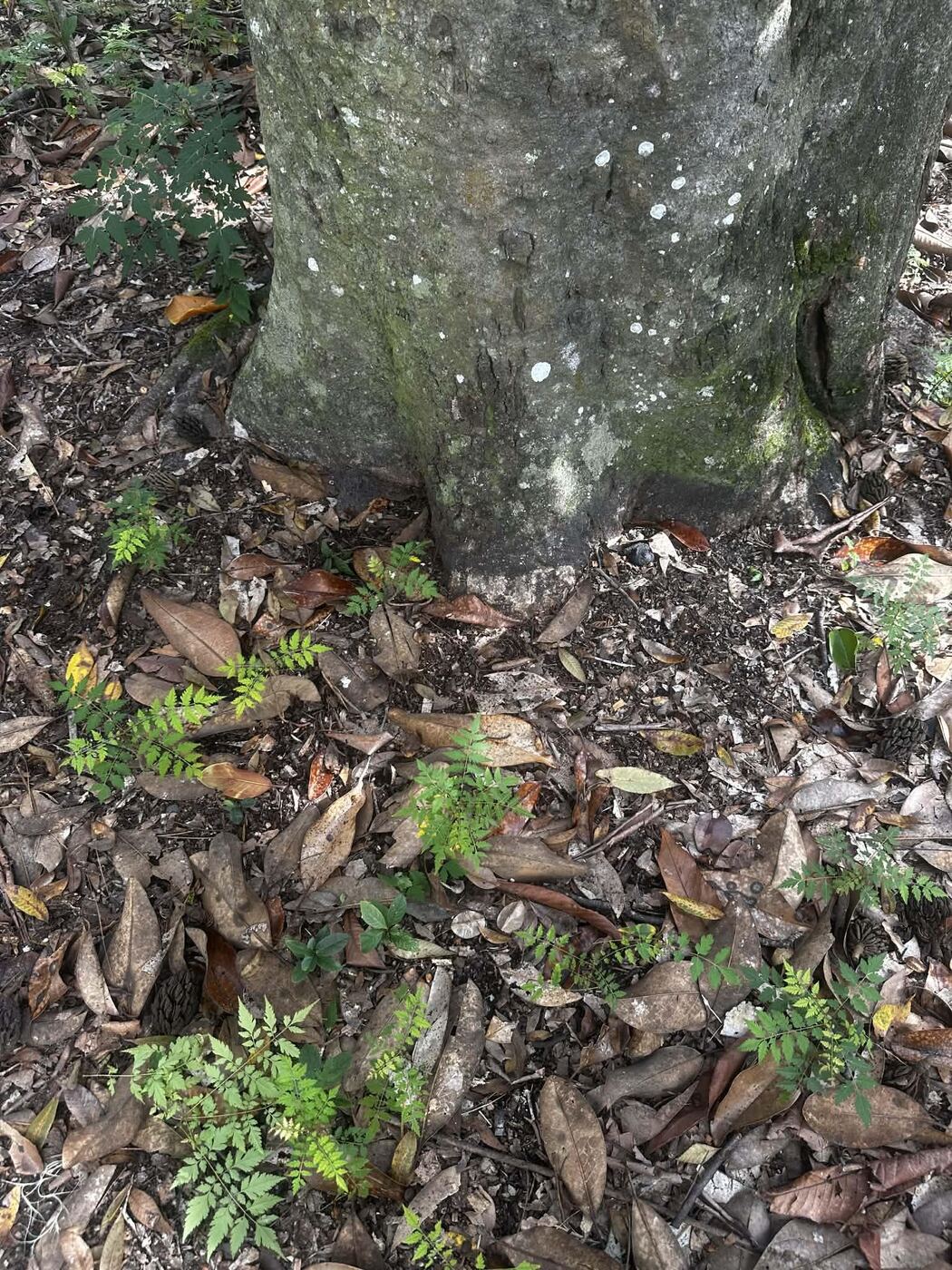
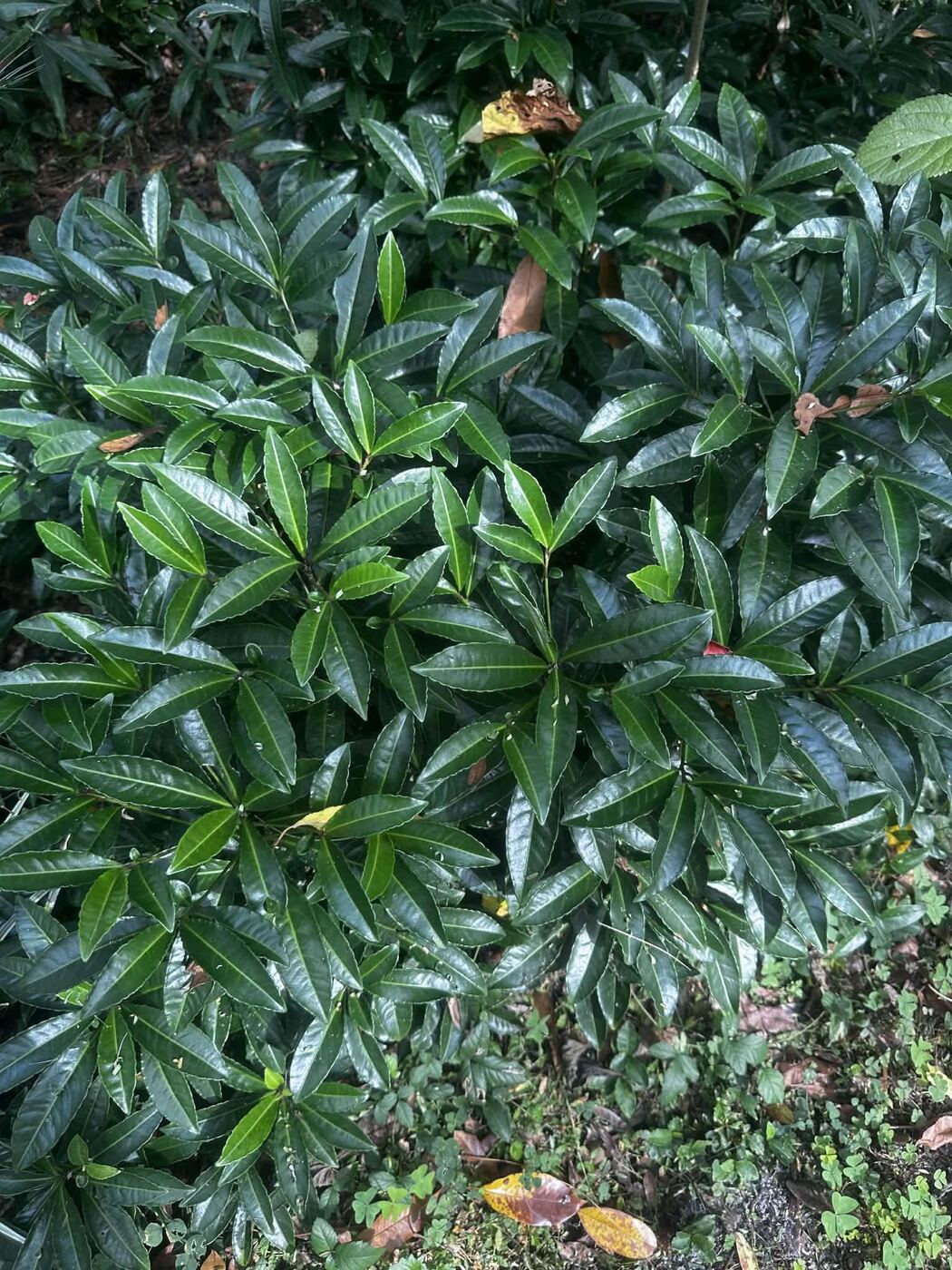
The front of the property carries the clearest evidence of cultivation: azaleas, camellias, edible plants and other ornamentals gathered around the residences. Moving backward, the garden loosens into woodland. Pines rise above an open clearing. Oaks, magnolias, hickories and palms create deeper shade. Some parts of the understory remain open; others have become difficult to enter where silverthorn, coral ardisia and other non-native plants have spread.
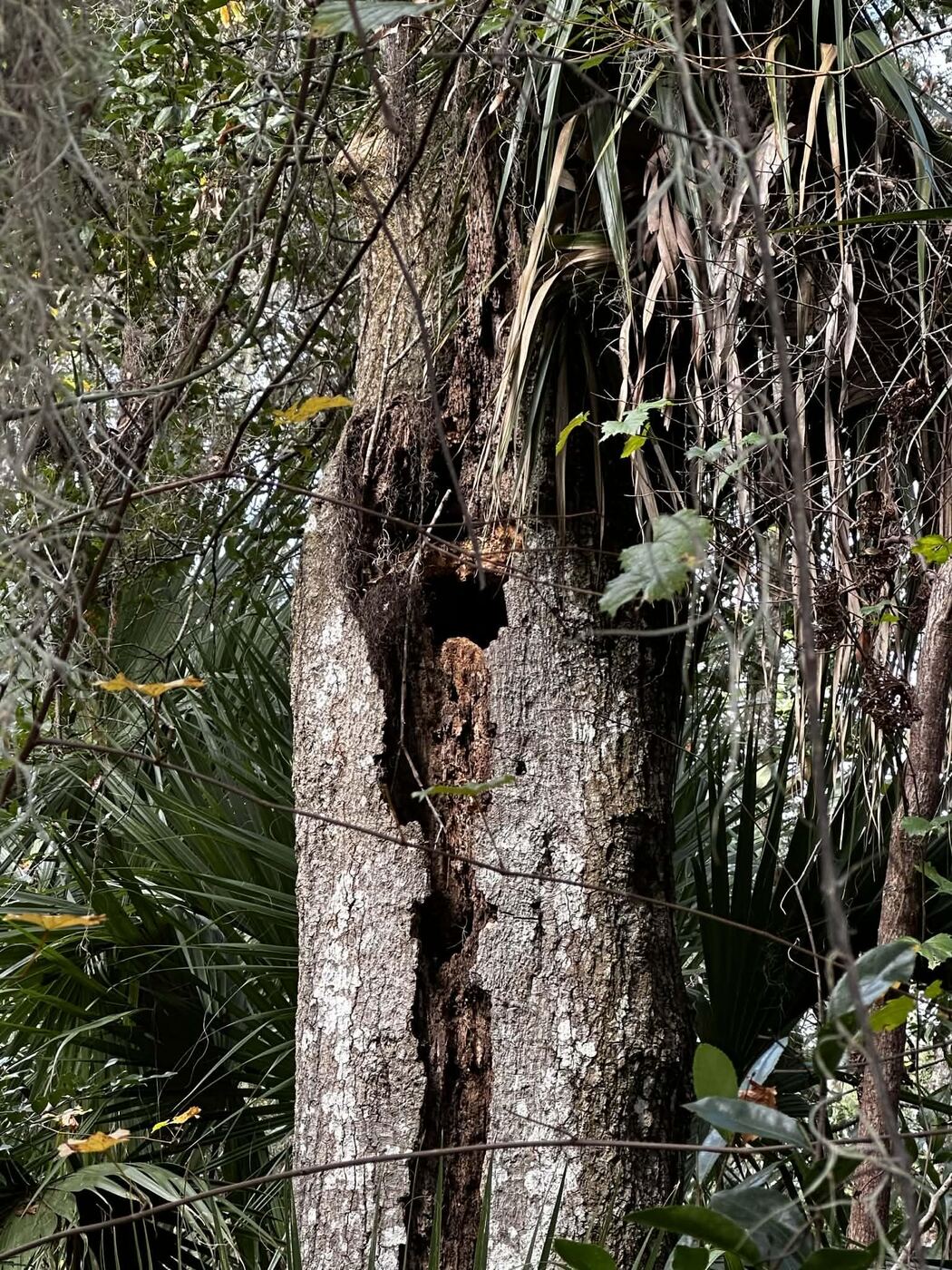
Several standing dead trees contain cavities. Fallen water oaks, branches and accumulated leaves are slowly being taken apart by fungi, insects and soil organisms. What can first look like neglect is also habitat, although deadwood near homes and paths must always be considered in relation to safety.
A landscape in layers
The most compelling quality of the property is not any single rare encounter, but the proximity of many different conditions: sun and shade, cultivated and self-willed growth, standing and fallen wood, dry ground and small damp refuges. That variety creates opportunities for many forms of life, even within a small residential parcel.
At the Edge of the Preserve
The presence of the Lake Woodruff landscape changes how I understand these four acres. Larger mammals recorded here or nearby are not supported by this property alone. Their appearance is better understood as evidence that the homestead belongs to a much broader inhabited landscape. Bears, bobcats and coyotes may pass through or along its edges; birds use the canopy and understory more continuously; insects, reptiles and small mammals experience it at an entirely different scale.
To describe Wildwood Springs as part of a corridor is therefore an interpretation rather than a boundary that I have mapped. What I can say with confidence is that the property retains woody cover beside protected land and that a surprising variety of animals has been encountered within or around it. Its value lies partly in permeability: the possibility of passage, refuge and continuity.
Four acres cannot contain the lives of the largest animals that visit it. It can, however, choose whether to meet the surrounding landscape with cover, food and relative safety, or with another hard edge.
03
The Cultivated Garden
The garden is not separate from the natural history of the property. Its camellias, azaleas, citrus, loquat and other planted species reveal earlier human choices; its escaping ornamentals reveal how quickly a garden can cross into woodland. Native and non-native are useful distinctions, but they are not identical to beneficial and harmful. Some cultivated plants remain localized. Others seed or spread into natural areas and alter the understory.
The work here is not to erase every trace of cultivation. It is to notice which plants are moving, which are forming dense cover, which are supporting wildlife, and which can remain without undermining the recovering woodland. Coral ardisia, silverthorn, air potato, camphor, privet and invasive sword fern deserve particular attention where they are demonstrably spreading. Benign ornamentals can be evaluated more slowly.
The Pine Opening
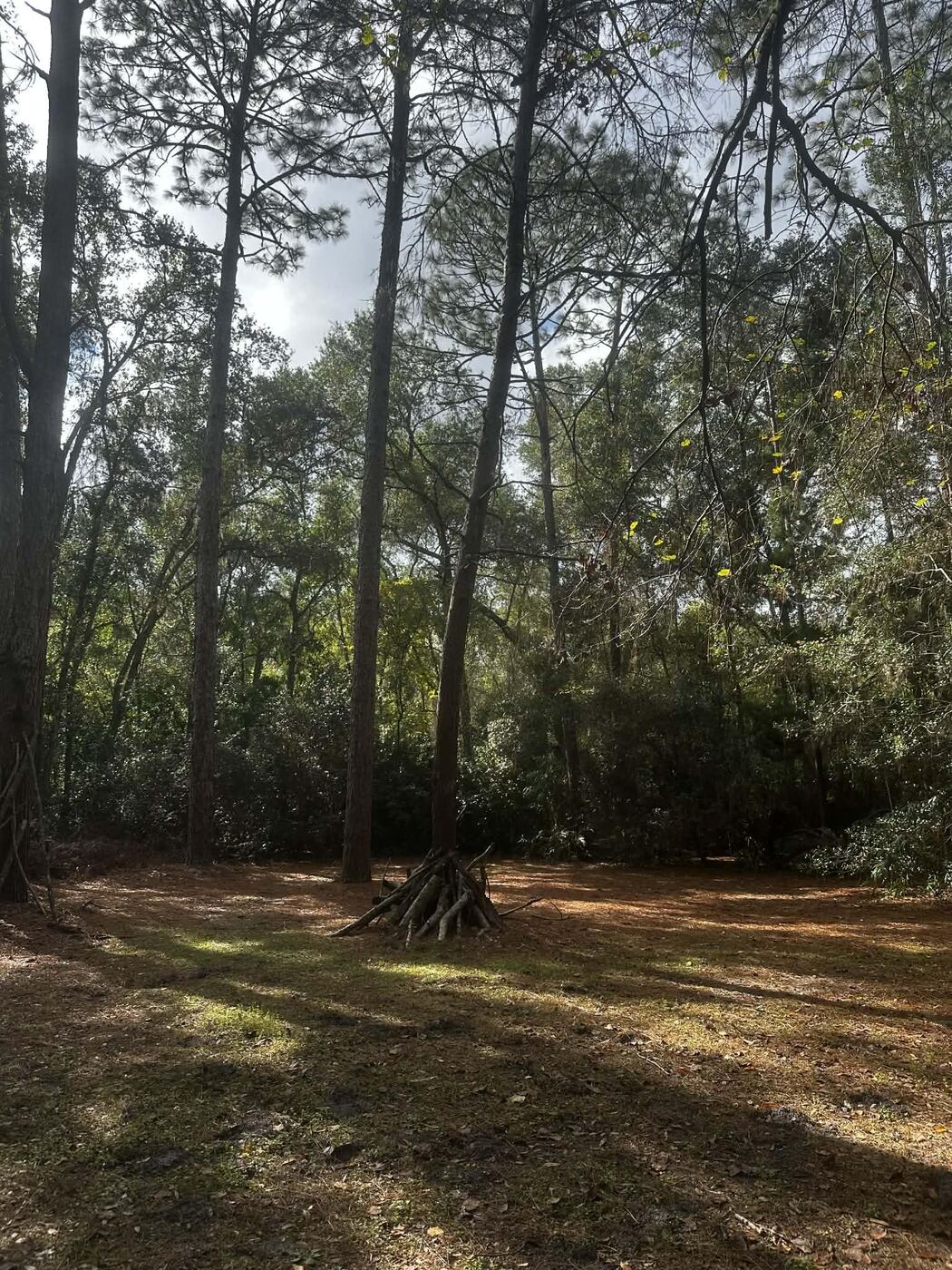
The pine opening is one of the places where the property changes character most visibly. In winter the ground can seem sparse. By late winter and spring, lyreleaf sage flowers through it. Gopher tortoises have taught me to see the openness differently: not as empty ground, but as a sunlit feeding and movement space within an increasingly shaded property.
The mature pines evoke a fire-shaped landscape, but the present clearing cannot be assigned to a particular historic community without soils, vegetation and management records. Its practical importance is more immediate. It is one of the few places where sunlight reaches the ground, and it should be protected from encroaching woody invasives while its seasonal vegetation is documented.
04
Beneath Oak and Magnolia
Beyond the opening, oak, magnolia, hickory, sweetgum, palms and other trees create a layered hammock-like woodland. The canopy is partly closed. Fruiting shrubs and vines occupy the middle layers, while herbs, seedlings, leaf litter and fungi form the ground layer. The exact natural-community classification remains something to investigate rather than declare, but the structural variety is unmistakable.
Flying squirrels, barred owls, woodpeckers, wrens, thrashers and migrating songbirds have all shaped my understanding of this part of the property. Their presence does not prove that every ecological requirement is being met here. It does show that cavities, cover, bark, foliage and the surrounding landscape are being used in ways that deserve protection.
The forest is not a backdrop to the animals. Its layers are the architecture through which they move.
Deadwood and the Forest Floor
Standing dead trees and fallen wood are among the most valuable and easily misunderstood features at Wildwood Springs. Cavities may offer roosting or nesting opportunities. Loose bark shelters invertebrates. Fallen trunks retain moisture and pass slowly into the soil. Brittlegills, deer mushrooms and other fungi recorded here are visible expressions of a much larger decomposer community that has not been formally surveyed.
Deadwood should be retained where it can safely remain. Trees close to structures, paths or frequently used spaces require qualified risk assessment; habitat value does not remove the responsibility to protect people and animals from dangerous failure.
Leaf litter should be allowed to remain in woodland areas. Scraping the forest floor, removing every fallen limb or applying broad fungicides would simplify the very layers that make the property interesting.
05
After Dark
Dusk reveals a second property layered over the first. Bats move overhead. Moths visit flowers and lights. Frogs call after rain. Owls and night-flying birds make the familiar woodland briefly difficult to interpret. Nocturnal observations deserve their own record because daylight surveys alone cannot describe the life of this place.
The original inventory includes moths, mantids, cicadas, antlions, spiders and other invertebrates encountered across different seasons. Their variety suggests many lines of future study, but it does not yet constitute a measured account of abundance or ecosystem condition. A porch-light log, moth sheet, acoustic recordings and repeated timed observations could turn these encounters into a more useful long-term record.
06
Stewardship as an Experiment
The first certification paper offered a conventional management plan. This portrait takes a more cautious approach. These are not prescriptions for restoring an abstract historical landscape. They are small experiments in caring for the place that exists now. Each intervention should be limited, documented and reassessed according to what returns, what disappears and what I learn.
Principles
- Begin with what is spreading most aggressively, not with every plant that happens to be non-native.
- Work in small sections so wildlife cover is not removed all at once.
- Protect gopher tortoise burrows and seek current professional or agency guidance before disruptive work nearby.
- Retain safe snags, fallen wood and leaf litter in woodland areas.
- Avoid rodenticides and broad pesticide use that can move through the food web.
- Use herbicides only when necessary, strictly according to the product label and with site-appropriate guidance.
- Photograph and monitor each treatment area before expanding the same method elsewhere.
Experiment One Reopen a Small Understory Plot
Observation: Coral ardisia, silverthorn, privet, camphor seedlings and other invasive woody plants have created dense patches that suppress movement, light and native regeneration in parts of the woodland.
Action: Select one modest plot. Record its dimensions and photograph it from a fixed point. Remove fruit before disturbing berry-bearing plants. Hand-pull seedlings where the soil and nearby burrows will not be damaged; use cut-stump treatment only with an appropriate labeled product and guidance. Leave leaf litter and native seedlings intact.
Question: Which native plants emerge after the invasive layer is reduced, and how quickly do invasive seedlings return?
Review: Photograph monthly for the first six months, then seasonally. Do not enlarge the treatment until the response is understood.
Experiment Two Protect the Pine Opening
Observation: The opening supports seasonal flowers and sunny ground used by gopher tortoises, while woody plants advance from its edges.
Action: Establish fixed photo points and mark the current edge. Remove only confirmed invasive encroachment initially. Record flowering plants, tortoise use and the amount of exposed sunlight through the year.
Question: Can the open character be maintained through selective removal without unnecessary disturbance of native cover?
Experiment Three Watch the Deadwood
Observation: Standing cavities, fallen trunks and log piles appear to support fungi, insects and vertebrate activity.
Action: Retain safe material; photograph selected logs and cavities; record fruiting fungi, insect emergence, nests, roosts and signs of use. Seek an arborist assessment for dead trees within striking distance of occupied areas.
Question: Who uses the wood, and how does that use change as decay advances?
07
A Practical Five-Year Record
The most valuable improvement will not be a more forceful conclusion. It will be a better record. The following rhythm is deliberately simple enough to sustain.
- Every encounter
- Date, time, location or habitat zone, weather, evidence type, photograph or recording number, provisional identification and confidence.
- Each month
- One photograph from every fixed photo point; flowering and fruiting notes; conspicuous arrivals, absences and disturbances.
- Each season
- A short timed bird count, a nocturnal observation, an invasive-regrowth check and a written reflection on what changed.
- Each year
- Update the species catalogue, preserve corrections, compare photographs and choose no more than three stewardship priorities.
Questions Worth Carrying
- Which animals are residents, regular visitors or brief passers-through?
- Where does water persist after rain, and which species appear there?
- Which plants return after a small invasive-removal experiment?
- How does the pine opening change as surrounding vegetation grows?
- Which moths and other nocturnal insects appear in each part of the year?
- Which early identifications need to be corrected?
A naturalist’s record becomes trustworthy not because it never changes, but because it preserves the path by which understanding changed.
08
The Wildwood Record
The following catalogue preserves the species included in the December 2025 certification paper, with obvious duplications and spelling inconsistencies corrected. Because the original notes did not consistently distinguish direct sightings from tracks, calls, photographs or probable identifications, inclusion here should be read as a baseline record rather than independent verification. Scientific names and identification confidence should be reviewed as the catalogue is rebuilt from dated evidence.
Mammals
Nine-banded armadillo — Dasypus novemcinctus; bats — Lasiurus spp. (provisional genus-level record); Florida black bear — Ursus americanus floridanus; bobcat — Lynx rufus; coyote — Canis latrans; white-tailed deer — Odocoileus virginianus; eastern cottontail — Sylvilagus floridanus; southern flying squirrel — Glaucomys volans; eastern gray squirrel — Sciurus carolinensis; mice — species undetermined; Virginia opossum — Didelphis virginiana; raccoon — Procyon lotor; roof rat — Rattus rattus.
Reptiles and Amphibians
Banded watersnake — Nerodia fasciata; eastern coral snake — Micrurus fulvius; brown anole — Anolis sagrei; Cuban treefrog — Osteopilus septentrionalis; eastern ratsnake — Pantherophis alleghaniensis; gopher tortoise — Gopherus polyphemus; green anole — Anolis carolinensis; southern black racer — Coluber constrictor priapus; rough greensnake — Opheodrys aestivus; southern toad — Anaxyrus terrestris; ground skink — Scincella lateralis (provisional identification).
Birds
American crow — Corvus brachyrhynchos; American robin — Turdus migratorius; barred owl — Strix varia; black vulture — Coragyps atratus; blue jay — Cyanocitta cristata; brown thrasher — Toxostoma rufum; Carolina chickadee — Poecile carolinensis; Carolina wren — Thryothorus ludovicianus; cedar waxwing — Bombycilla cedrorum; chimney swift — Chaetura pelagica; eastern phoebe — Sayornis phoebe; great crested flycatcher — Myiarchus crinitus; gray catbird — Dumetella carolinensis; hermit thrush — Catharus guttatus; magnolia warbler — Setophaga magnolia; northern bobwhite — Colinus virginianus; northern cardinal — Cardinalis cardinalis; northern parula — Setophaga americana; painted bunting — Passerina ciris; pileated woodpecker — Dryocopus pileatus; red-bellied woodpecker — Melanerpes carolinus; red-shouldered hawk — Buteo lineatus; ruby-throated hummingbird — Archilochus colubris; summer tanager — Piranga rubra; tree swallow — Tachycineta bicolor; tufted titmouse — Baeolophus bicolor; turkey vulture — Cathartes aura; yellow-rumped warbler — Setophaga coronata.
Invertebrates and Other Animals
American grass mantis — Thesprotia graminis; American wheel bug — Arilus cristatus; cicadas — family Cicadidae; curved-tooth geometer — Eutrapela clemataria; dragonflies — order Odonata, species records incomplete; eastern lubber grasshopper — Romalea microptera; fir tussock moth — Orgyia detrita; forest tent caterpillar moth — Malacosoma disstria; grizzled mantis — Gonatista grisea; Gulf fritillary — Dione vanillae; western honey bee — Apis mellifera; pantropical huntsman spider — Heteropoda venatoria; large necklace moth — Hypsoropha monilis; long-tailed skipper — Urbanus proteus; monarch — Danaus plexippus; katydid — family Tettigoniidae, identification incomplete; orange-barred sulphur — Phoebis philea; painted lady — Vanessa cardui; pleasing picture-winged antlion — Ululodes floridanus; polka-dot wasp moth — Syntomeida epilais; red-shouldered bug — Jadera haematoloma; rosy wolfsnail — Euglandina rosea; southern two-striped walkingstick — Anisomorpha buprestoides; southern pink-striped oakworm — Anisota virginiensis; spicebush swallowtail — Papilio troilus; wandering hammerhead worm — Bipalium kewense; Whitfield’s forester — Alypia wittfeldii (record requires rechecking); dot-lined white moth — Artace cribraria; orbweaver spiders — family Araneidae.
Fungi
Brittlegills — Russula spp.; deer mushrooms — Pluteus spp.; other members of family Pluteaceae — identification incomplete.
Plant Record
The plants below were included in the survey. The categories reflect the way they are currently classified. Cultivated plants may be non-native without spreading; some identifications and native-status assignments may require renewed review.
Native Plants
American black nightshade — Solanum americanum; American holly — Ilex opaca; American sweetgum — Liquidambar styraciflua; azure blue sage — Salvia misella; American beautyberry — Callicarpa americana; beggarticks — Bidens alba; black-eyed Susan — Rudbeckia hirta; blue toadflax — Nuttallanthus canadensis; cabbage palm — Sabal palmetto; Carolina laurelcherry — Prunus caroliniana; Carolina wild petunia — Ruellia caroliniensis; carpetgrass — Axonopus fissifolius; southern redcedar — Juniperus virginiana var. silicicola; climbing hempvine — Mikania scandens; common persimmon — Diospyros virginiana; common wireweed — Sida ulmifolia; coontie — Zamia integrifolia; dwarf palmetto — Sabal minor; Florida hedgenettle — Stachys floridana; hawthorn — Crataegus spp.; live oak — Quercus virginiana; longleaf pine — Pinus palustris; lyreleaf sage — Salvia lyrata; maypop — Passiflora incarnata; Pennsylvania everlasting — Gamochaeta pensylvanica; pignut hickory — Carya glabra; pink purslane — Portulaca pilosa; American pokeweed — Phytolacca americana; eastern redbud — Cercis canadensis; river birch — Betula nigra; roundleaf bluet — Houstonia procumbens; snakeroot — Ageratina spp.; southern dewberry — Rubus trivialis; southern magnolia — Magnolia grandiflora; fernleaf beggarticks — Bidens bipinnata; spiderwort — Tradescantia spp.; spotted beebalm — Monarda punctata; trumpet honeysuckle — Lonicera sempervirens; trumpet creeper — Campsis radicans; Turk’s cap — Malvaviscus arboreus (native status and variety require review); tropical chickweed — Drymaria cordata; Virginia pepperweed — Lepidium virginicum; water oak — Quercus nigra; white morning-glory — Ipomoea lacunosa; whitemouth dayflower — Commelina erecta.
Cultivated Non-native and Invasive Plants
Air potato — Dioscorea bulbifera; avocado — Persea americana; azalea — Rhododendron spp.; banana — Musa spp.; blue myrtle cactus — Myrtillocactus geometrizans; bougainvillea — Bougainvillea spp.; podocarpus — Podocarpus macrophyllus; camellia — Camellia japonica; camphor tree — Cinnamomum camphora; cardboard palm — Zamia furfuracea; cast-iron plant — Aspidistra elatior; chamberbitter — Phyllanthus urinaria; citrus — Citrus spp.; coral ardisia — Ardisia crenata; crested Philippine violet — Barleria cristata; goldenrain tree — Koelreuteria paniculata; nandina — Nandina domestica; Chinese hibiscus — Hibiscus rosa-sinensis; ivy-leaved morning-glory — Ipomoea hederacea; jacaranda — Jacaranda mimosifolia; pagoda flower — Clerodendrum japonicum; Japanese pittosporum — Pittosporum tobira; Johnsongrass — Sorghum halepense; loquat — Eriobotrya japonica; marsh woundwort — Stachys palustris (identification and Florida status require review); Mexican sunflower — Tithonia diversifolia; mondo grass — Ophiopogon japonicus; oleander — Nerium oleander; palmgrass — Setaria palmifolia; split-leaf philodendron — Thaumatophyllum bipinnatifidum; pineapple — Ananas comosus; privet — Ligustrum spp.; rice-paper plant — Tetrapanax papyrifer; sago palm — Cycas revoluta; senita cactus — Lophocereus schottii; silverthorn — Elaeagnus pungens; shrimp plant — Justicia brandegeeana; lawn orchid — Zeuxine strateumatica; sword fern — Nephrolepis spp., species confirmation needed; sweet viburnum — Viburnum odoratissimum.
09
A Record That Remains Open
This portrait is necessarily incomplete. Some species have appeared once and never returned; others were present for years before I learned how to notice them. Identifications will change. New relationships will emerge. The land itself will respond to storms, drought, loss, growth and stewardship.
The first assessment tried to give the property a score. I no longer think a number is the most revealing conclusion. Wildwood Springs is ecologically complicated: well connected to a larger landscape, structurally varied, burdened in places by invasive growth, limited in natural surface water, and extraordinarily generous as a place to observe. Its value is not captured by perfection. It lies in what persists here and in the possibility of caring for it more attentively.
My purpose is not to stand outside the woodland and pronounce it understood. It is to remain in relationship with it: to watch, to question, to correct myself, and to leave a record honest enough for someone else to follow.